How to Single Crochet: A Beginner’s Step-by-Step
The single crochet is the workhorse stitch behind most beginner projects. Learn it step by step, how to turn your rows, and how to keep your edges straight.
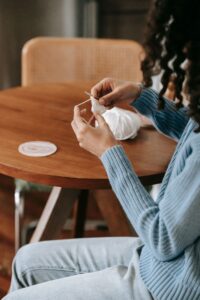
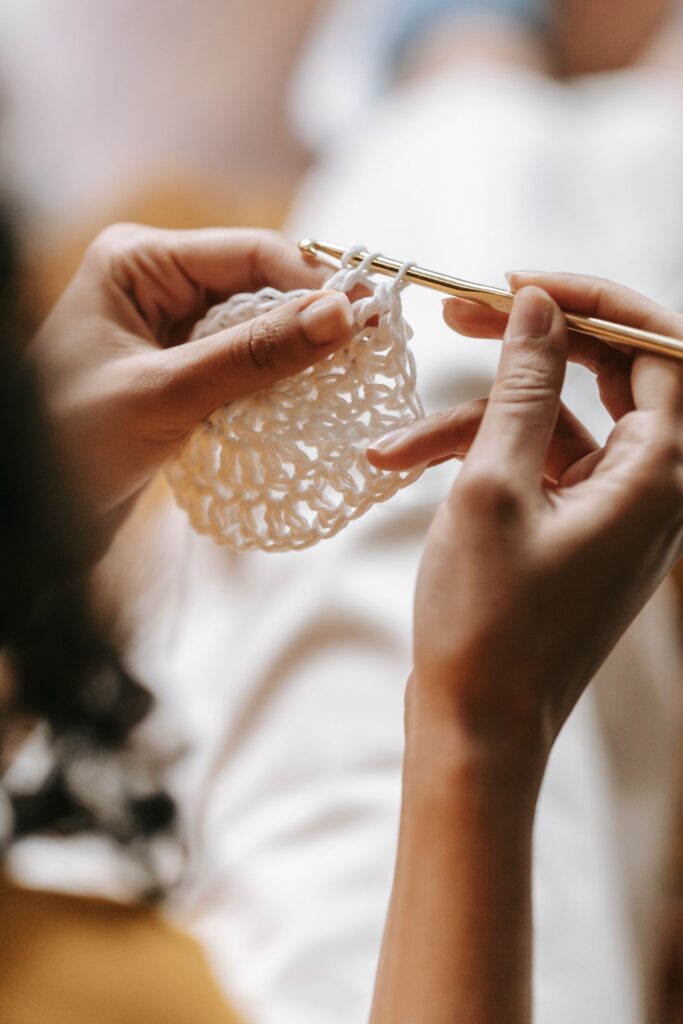
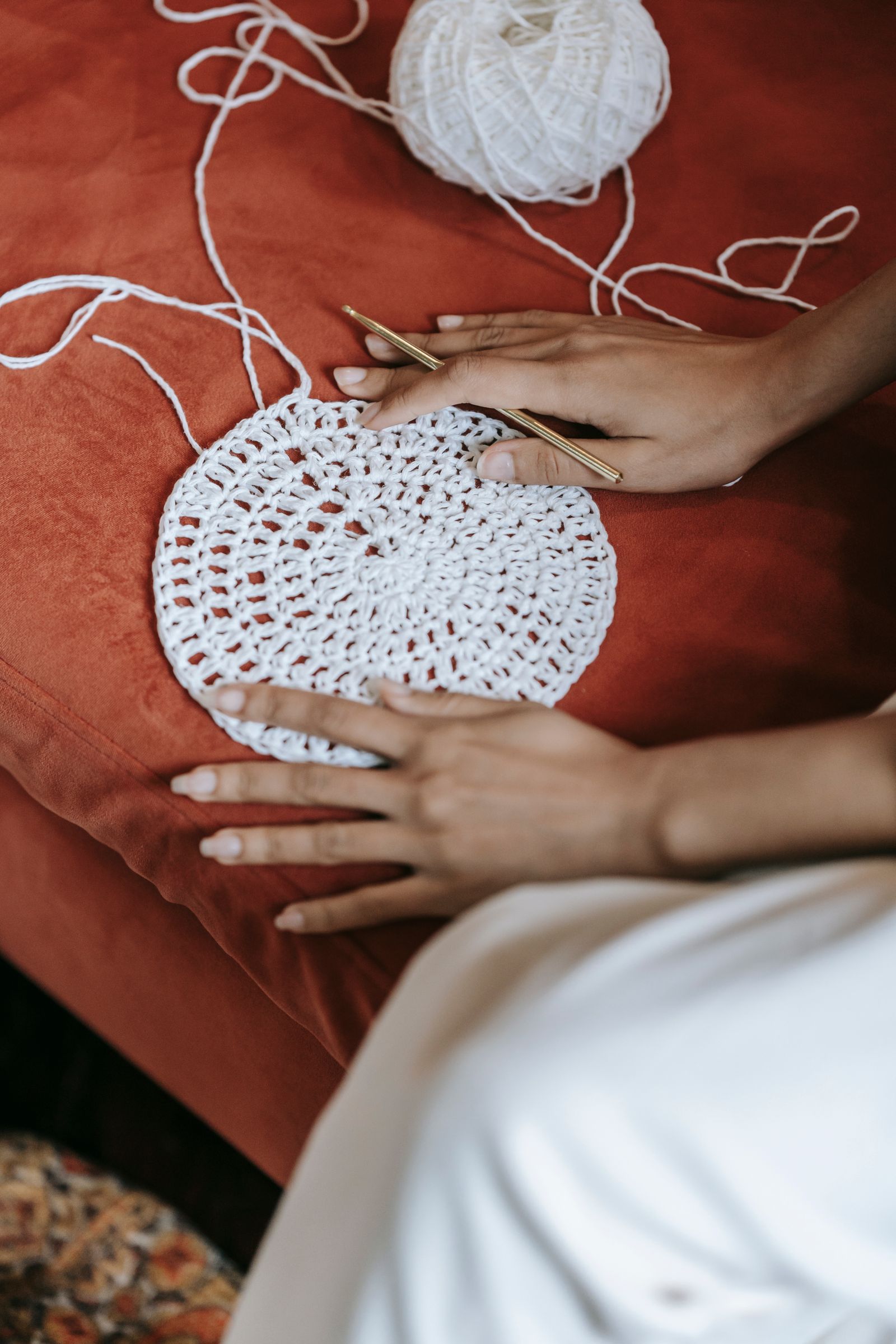
If you learn only one stitch, make it the single crochet (abbreviated sc in US patterns). It’s short, sturdy, and it’s the backbone of countless beginner projects – dishcloths, coasters, scarves, and the flat pieces you practice on. Once your hands know the single crochet, most other stitches are just variations on the same rhythm.
Jump to section
I’m Nora, and single crochet is the stitch I still reach for whenever I want to test a new yarn or just settle in for a quiet evening. It’s also the stitch where most beginners hit their first real wall – not because any one motion is hard, but because there are four small steps happening in quick succession, and it’s easy to lose track of which loop is which.
Here’s what “getting it right” looks like: a row that stays the same width as the one before it, stitches that look like neat little V’s from the front, and a rhythm where your hands stop needing to think about each individual motion. None of that happens on the first row, and it isn’t supposed to.
Set up
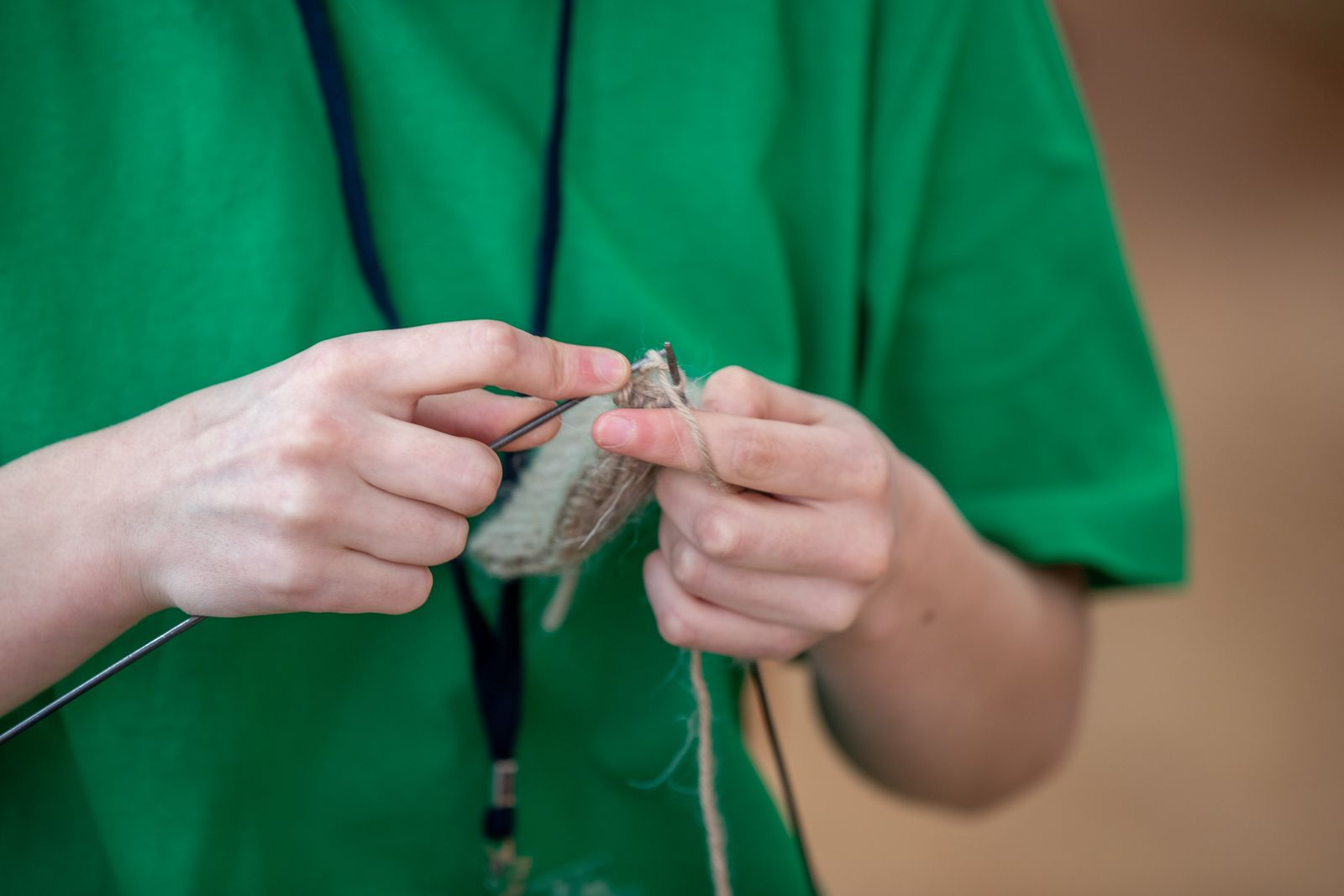
Start with a slip knot and a foundation chain – say, 11 chains for a practice swatch. You’ll work your first row of single crochet into that chain.
The single crochet, step by step
- Insert the hook into the second chain from the hook. (The first chain is skipped; it gives the row a little height.)
- Yarn over – wrap the working yarn over the hook from back to front.
- Pull up a loop. Draw the yarn back through the chain only. You now have two loops on the hook.
- Yarn over again and pull through both loops on the hook.
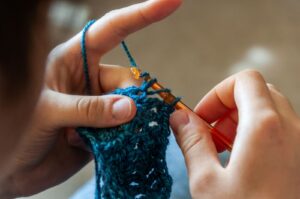
That’s one single crochet. One loop remains on the hook, ready for the next stitch. Work a single crochet into each remaining chain across. If you started with 11 chains, you’ll end the row with 10 single crochets.
Turning your work
At the end of the row, you need to turn and come back the other way. To do that, chain 1 (this is your turning chain), then physically turn the work over like a page.
Work a single crochet into the top of each stitch across. The tops of stitches look like little V’s lying sideways; you insert the hook under both loops of each V.
Keeping your edges straight
The number one beginner frustration is a swatch that gets narrower or wider as it grows. It almost always comes down to two things:
- Missing the last stitch. The final stitch of each row hides in the corner and is easy to skip – that makes your work shrink. Count your stitches at the end of every row until it becomes automatic.
- Working into the turning chain by accident. That adds a stitch and makes your work grow. Since the sc turning chain doesn’t count, never stitch into it.
Why this stitch is worth mastering
Single crochet makes a dense, warm, hard-wearing fabric with very little gap between stitches. That’s exactly what you want for things that get used and washed. It also makes counting easy, which is why nearly every “learn to crochet” project starts here. Spend an evening making a small square in single crochet and you’ll have the single most useful skill in the craft.
Practice ideas before you start a real project
Once a single row feels manageable, string a few together before committing to anything with a deadline or a gift recipient attached:
- Work 10 rows on the same swatch and count after every single one. Write the stitch count down as you go. If a number changes, you’ll know exactly which row to check.
- Try two different yarn weights on the same hook. You’ll feel how a thicker yarn fills the hook differently, which builds a more general feel for tension that transfers to other stitches later.
- Finish a real, tiny project. A coaster or a simple dishcloth uses nothing but single crochet from start to finish, so it’s a satisfying way to prove to yourself the skill is real before moving on.
Frequently asked questions
Why is my single crochet fabric so stiff?
Single crochet is naturally dense. If it feels boardy, go up a hook size or choose a softer, lighter yarn – the same stitch relaxes a lot with a bigger hook.
US vs UK – is single crochet the same everywhere?
No, and this trips people up. A US single crochet is called a double crochet in UK patterns. Always check which term set your pattern uses.
How do I fix a mistake a few stitches back?
Gently pull the working yarn to “frog” (undo) stitches one at a time back to the error, put the live loop back on your hook, and carry on. Undoing is part of crochet, not a failure.
How many single crochet stitches should fit in an inch?
That depends entirely on your yarn weight and hook size, so there’s no universal number. What matters while you’re learning is consistency row to row, not hitting a specific measurement – gauge only becomes important once you’re following a sized pattern.
My stitches look fine individually but the fabric curls at the edges. Why?
A little curl in a small practice swatch is common and often relaxes once the piece is bigger or has been blocked (gently washed and pinned flat to dry). It’s rarely a sign you’re doing the stitch wrong.

One response