An Easy Beginner Dishcloth You Can Finish in an Evening
A simple single-crochet dishcloth is the perfect first finished project. This beginner pattern gives you the counts, the border, and tips to keep the edges square.
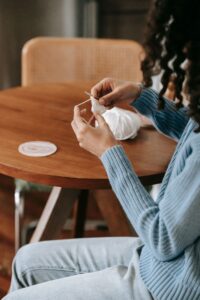
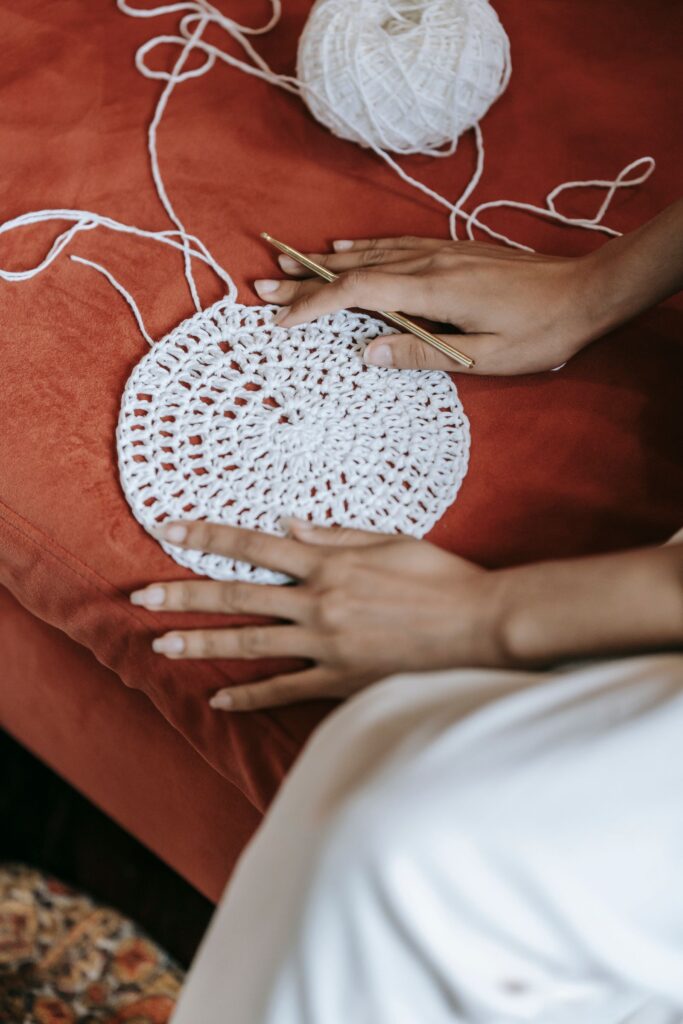
If you’ve practiced the single crochet and want an actual finished object to show for it, a cotton dishcloth is the perfect first project. It’s small, it’s genuinely useful, it teaches you to keep an edge straight, and you can finish one in an evening. Best of all, mistakes barely show once it’s in the sink.
Jump to section
Most beginners feel confident about the single crochet stitch itself, but working row after row is where the real learning happens – that’s where you discover whether you’re accidentally skipping the first stitch after you turn, or sneaking an extra one into the turning chain. A dishcloth is the ideal place to notice these habits, because the stitch count is small enough to check every single row without it feeling tedious.
“Getting it right” here doesn’t mean perfect stitches from row one. It means finishing with a cloth that’s roughly the same width top to bottom, with edges that run straight instead of stair-stepping in or out. That’s the exact skill a scarf, a blanket, or a garment will ask of you later – this project just asks for it on a much smaller, much more forgiving scale.
What you’ll need
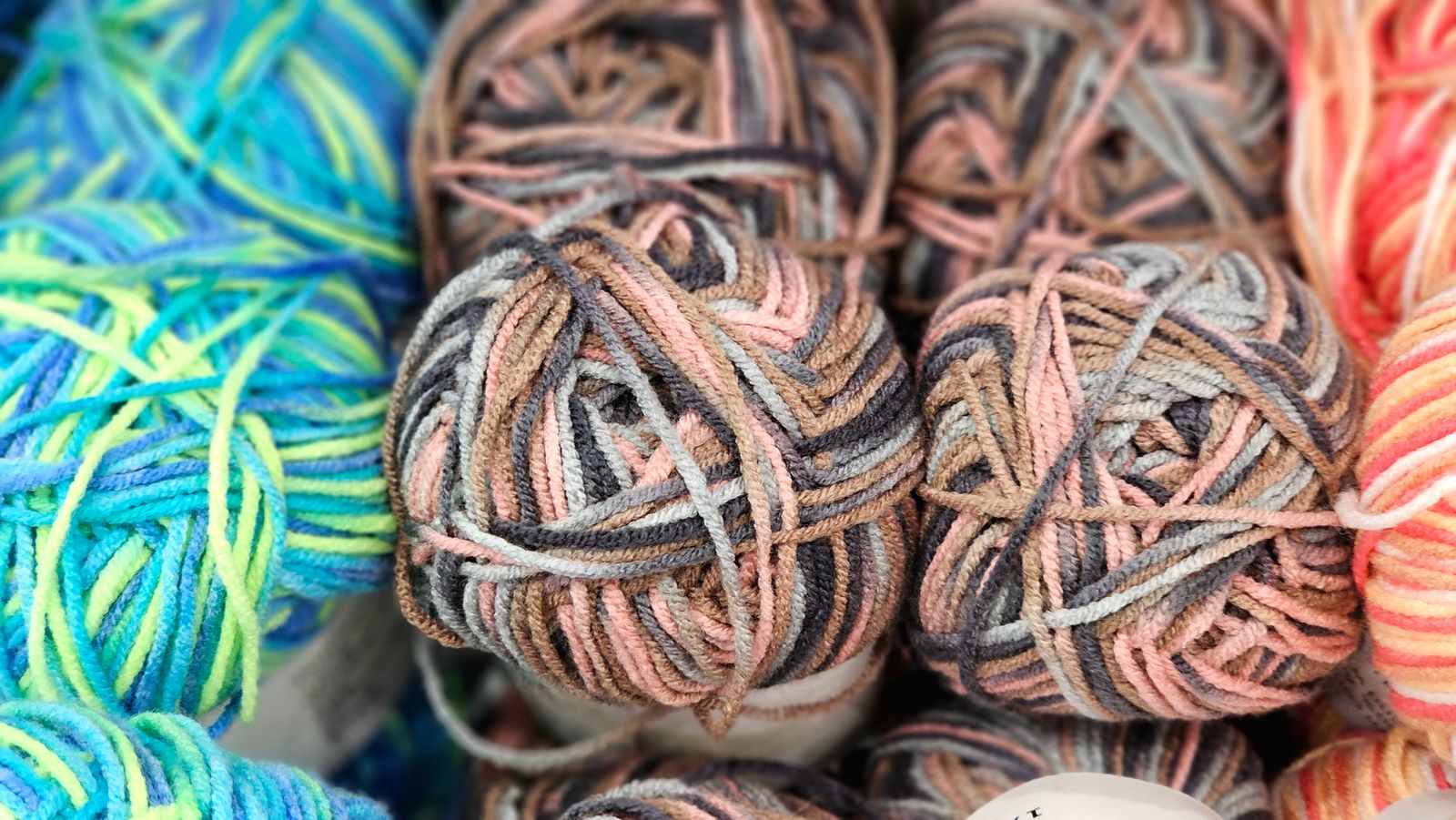
- Worsted-weight (#4) cotton yarn – cotton is ideal because it’s absorbent and hard-wearing
- A 5.0 mm (US H/8) hook
- Scissors and a yarn needle
Cotton behaves a little differently from acrylic – it has less give – but it’s a great teacher because your stitches stay crisp and easy to see. (For everything else you might want on hand before you start, see our beginner supplies checklist.)
The pattern
This is worked entirely in single crochet (sc), US terms. A finished cloth is roughly 8 inches square, but you can make it any size by starting with more or fewer chains.
- Foundation: Chain 31. (For a different size, chain any number and remember your first row will have one fewer stitch than your chain count.) Counting a long chain can be tricky at first – lay it flat and count in small groups of five so you don’t lose your place.
- Row 1: Single crochet in the second chain from the hook and in each chain across. You’ll have 30 single crochets. Chain 1 and turn.
- Rows 2 and on: Single crochet in each stitch across (30 stitches), chain 1, turn. Remember the chain-1 doesn’t count as a stitch, so your very first single crochet of the row goes into the first actual stitch, not into the chain.
- Repeat until the piece is as tall as it is wide – a square. That’s usually around 30 rows, but trust your eye and a ruler over the row count.
A simple border
A round of single crochet all the way around tidies the edges and makes the cloth look finished:
- Work sc evenly along each side, placing 3 sc into each corner so the corners turn cleanly instead of pulling in.
- Along the top and bottom, you’ll work one sc per stitch. Along the sides (the row-ends), work roughly one sc per row – space them so the edge lies flat, not ruffled or puckered. If you’re not sure how many to place, start with one sc per row-end: too few pulls the side in, too many makes it ruffle outward.
- Join with a slip stitch to your first border stitch, fasten off, and weave in your ends.
Keeping it square
The same rule from single-crochet practice applies here: count 30 stitches at the end of every row. If a row or two came out uneven, keep going – a dishcloth is forgiving, and finishing the project teaches you more than restarting.
Common beginner mistakes (and how to fix them)
A few small habits account for most uneven dishcloths. The first is losing track of the very last stitch in a row – it likes to hide right before the turning chain, so if you consistently land on 29 stitches instead of 30, check there first. The second is treating the turning chain like a real stitch and working an extra single crochet into it, which is the more common way to end up at 31. The fix for both is the same: count across a row as you work it, at least until 30 becomes an automatic stopping point rather than something you have to think about.
A third habit is tension that loosens or tightens as you get more comfortable – your first few rows might be tighter than your last few. This shows up as a cloth that’s slightly narrower at the bottom than the top. It’s common, it softens out with washing and use, and it’s not something worth ripping out and redoing on a practice project like this one.
Why this project is worth it
A dishcloth gives you every core skill in miniature: a counted foundation, straight rows, turning, and a neat border – the exact sequence you’ll use on scarves and blankets later, just bigger.
Frequently asked questions
Can I use acrylic yarn instead of cotton?
You can for practice, but acrylic isn’t as absorbent and can melt against very hot pans, so cotton is the better choice for a cloth that actually gets used in the kitchen.
How much yarn does one dishcloth take?
Well under half of a standard worsted cotton ball, so a single ball usually makes two to three cloths.
My cloth came out as a rectangle, not a square. Keep crocheting rows until the height matches the width, then stop. Rows are a little shorter than stitches are wide, so a square usually needs a few more rows than you’d guess.
Can I add a hanging loop?
Yes – before you fasten off, chain 8 to 10 stitches, slip stitch back into the corner to form a loop, then fasten off and weave in the ends as usual. This only changes the very last step, not the body of the cloth.
Do I need to block a cotton dishcloth?
Not really. Cotton holds its shape well on its own, and a dishcloth gets washed and reshaped by hand every time you use it, so the light shaping a scarf or garment needs isn’t necessary here.

One response