The Beginner Crochet Supplies Checklist (What You Actually Need)
You do not need forty different tools to start crocheting. Here is the honest, minimal supply list a beginner actually needs, plus what can safely wait.
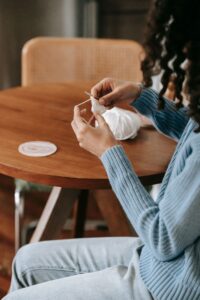
Walk into a craft store’s yarn aisle and it’s easy to feel like you need forty different tools before you can make a single stitch. You don’t. Crochet is one of the most low-cost, low-gear crafts around — most beginners can start with about five things, all inexpensive and easy to find. Here’s the honest, no-fluff list.
Jump to section
This overwhelm is almost always caused by the display, not the craft itself. Craft stores stock entire aisles of gadgets – row counters, blocking boards, stitch dictionaries, hook cases – because that’s what fills shelves, not because you need any of it to make your first square. It’s a genuinely common reason people never start: they leave the store convinced crochet requires a shopping list as long as their arm, and quietly give up before picking up a hook at all.
Knowing exactly what’s essential versus what’s optional matters because it’s the difference between spending fifteen minutes and thirty dollars, or spending an hour and eighty. A good outcome here is walking out with a small bag that covers everything your first three or four projects will need – nothing more, nothing you’ll regret buying, and nothing missing that stalls you halfway through your first dishcloth.
The essentials
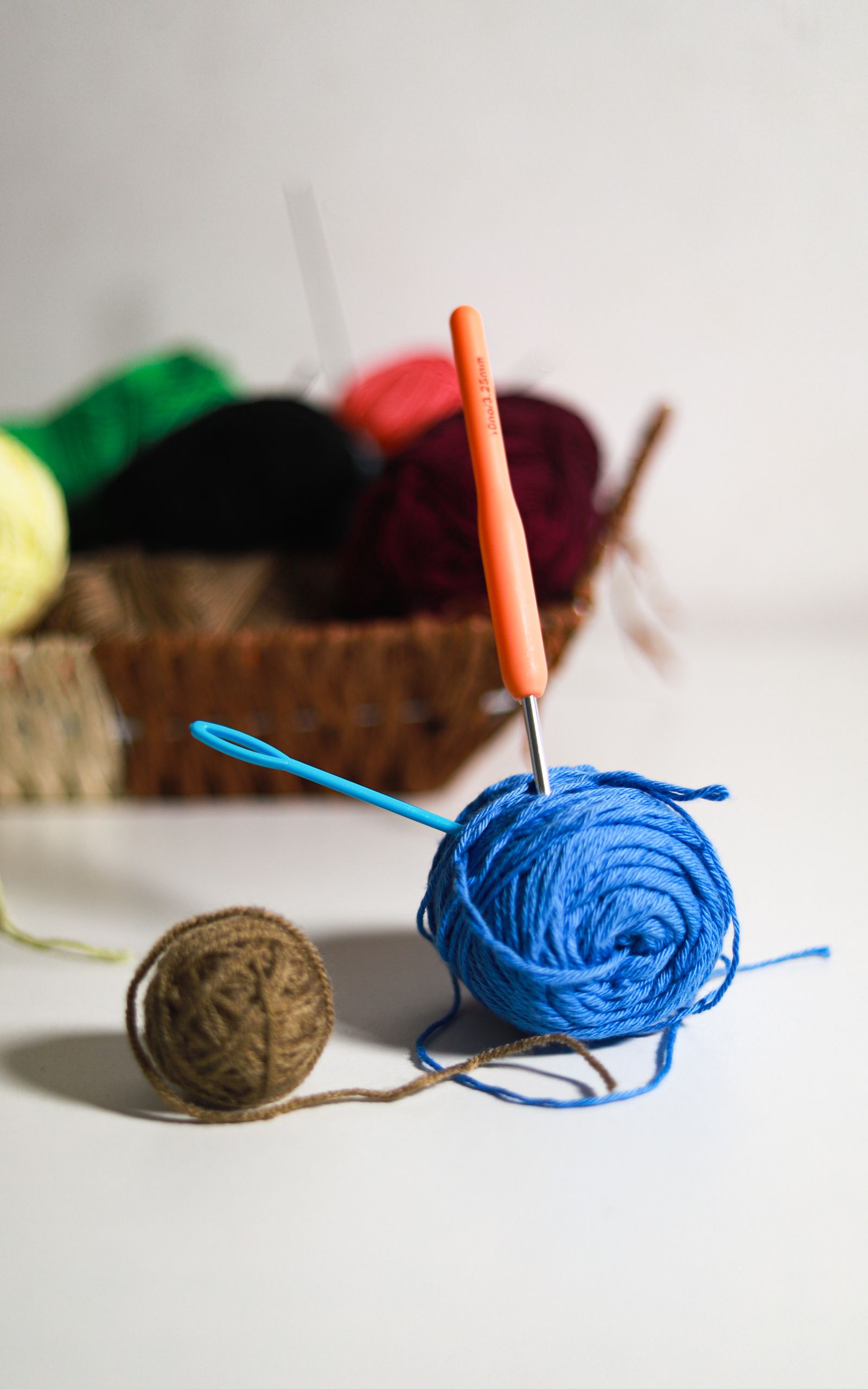
- One crochet hook, 5–5.5mm: This size (labeled H/8 or I/9 in US sizing) works well with common beginner yarn and is large enough to see your stitches clearly. You don’t need a full set yet — one good hook is plenty for your first several projects.
- A smooth, light worsted-weight yarn: “Worsted weight” (also labeled “medium” or “#4”) pairs naturally with a 5–5.5mm hook. Choose a smooth yarn in a light, solid color — fuzzy, dark, or textured yarns hide your stitches while you’re still learning.
- Scissors: Any small, sharp pair works for snipping yarn. You don’t need special “yarn scissors.”
- A yarn needle (tapestry needle): A large-eyed, blunt-tipped needle for weaving in loose ends and sewing pieces together. Metal or plastic both work.
- Stitch markers: Small locking markers (like tiny plastic safety pins), or even a scrap of contrasting yarn, to mark the start of a round or hold your place.
Nice to have later (not day-one necessities)
- A few more hook sizes: Once you’ve made a couple of projects, you’ll want other sizes for different yarn weights.
- A row counter: A small clicker or app that tracks your row — handy for longer patterns, but not essential early on.
- Blocking mats and pins: Used to pin a finished piece into shape while it dries. Useful for garments and lace, unnecessary for a first dishcloth or scarf.
- A project bag: Keeps yarn from tangling and tools from getting lost.
What you can skip entirely as a beginner
Skip novelty or “fun fur” yarns, metallic threads, and very thin lace-weight yarns for now — they’re harder to see and work with, even though they look appealing. You can also skip specialty hooks (ergonomic handles, lighted hooks, interchangeable sets) until you know your preferences.
With just the five essentials, you have everything you need to make your first several projects. Add extras only when a specific project or a growing preference calls for them.
Budget vs comfort: what actually matters
If you’re watching your spending, the good news is that the essentials list above is genuinely inexpensive – a basic hook, one ball of yarn, and a needle can cost less than a coffee and a pastry. Where it’s worth spending a bit more, if you can, is an ergonomic hook handle if you know your hands tire easily, since hand comfort affects whether you keep practicing at all. Everything else on the “nice to have later” list is genuinely optional and can wait until a specific project asks for it – a row counter app on your phone is free, and blocking mats only matter once you’re shaping garments or lace.
The trade-off to watch for is buying comfort features you don’t need yet instead of just starting. A cushioned hook grip is worth it if your hand already aches after a few minutes; it’s not worth it as a preemptive purchase before you’ve made a single stitch and found out whether that’s even a problem for you. Start with the plain essentials, notice what actually bothers you, and upgrade only that specific thing.
Once your first scarf or dishcloth is done and you know you’re sticking with it, that’s the right moment to revisit this list and decide what’s actually worth adding, rather than guessing up front.
Frequently asked questions
What hook size is best for an absolute beginner?
A 5–5.5mm hook (US H/8 or I/9) is a common beginner-friendly choice — large enough to see stitches and paired well with widely available worsted-weight yarn.
Does yarn color actually matter for learning?
Yes — light, solid colors make individual stitches much easier to see and count than dark or busy yarn.
Can I use a sewing needle instead of a yarn needle?
No — a sewing needle’s sharp point and small eye aren’t made for yarn. A yarn needle has a blunt tip and large eye so it doesn’t split the yarn.
Do I really need stitch markers, or can I improvise?
You can improvise – a scrap of contrasting yarn looped through a stitch works just as well as a locking marker. Buy proper markers later if you find yourself reaching for scrap yarn often.
Is it worth buying a full hook set right away to save money long-term?
Not usually. Most beginners settle on one or two favorite sizes and rarely touch the rest of a big set; buying sizes as you actually need them wastes less money than a large set with hooks you never use.

One response